


What’s your hook?
Late last year when we started paying close attention to good opening hooks, we started noting those TED talks that had particularly good ones. In this 3 minute video we produced below, we’ve spliced out 6 really notable ones, and what we consider a represenative sample of the different types of hooks you can deploy. From self-deprecating and provocative to extremely unexpected and wholly unrealistic (can you tell which one that is?), you might be inspired to try a different approach in your next talk.
See which one grab you best?
Great Opening Hooks from Articulation on Vimeo.
No CommentsBullets are for guns.
I was at a meeting recently with a local township official, and when I asked about what highlights we should know about his community, he left the room. He quickly and enthusiastically returned with a huge power point deck titled “State of the Township.” All I could see was page after page of bullet points.

Knowing I wasn’t interested in the detail of how their road kill eradication was going (presuming it was one of the hundreds of points), I just simply asked: ‘Can you tell me the top 3 things we should know about your township?’
He hesitated. And then said, “Well, we really have 15 great points, I’m not sure which 3 to pick. Maybe the schools? Maybe our ranking as a healthy community? I’m not sure, I’ll have to ask around and see what other messages may resonate.”
Bang bang. His message died right there. A missed opportunity. And in some essence, an unveiling of his lack of clear vision and leadership for his community.
So on occasion, I curse the slide, as it allows people to avoid telling a story. But in this case, and more frequently, I’m blaming the bullet point.
A thousand good ideas have a place in your presentation or message when they are tightly grouped, edited and organized. But when ideas simply get translated into bullets, it shoots unnecessary holes in what should be a memorable, repeatable message and story.
No CommentsEveryone needs a story
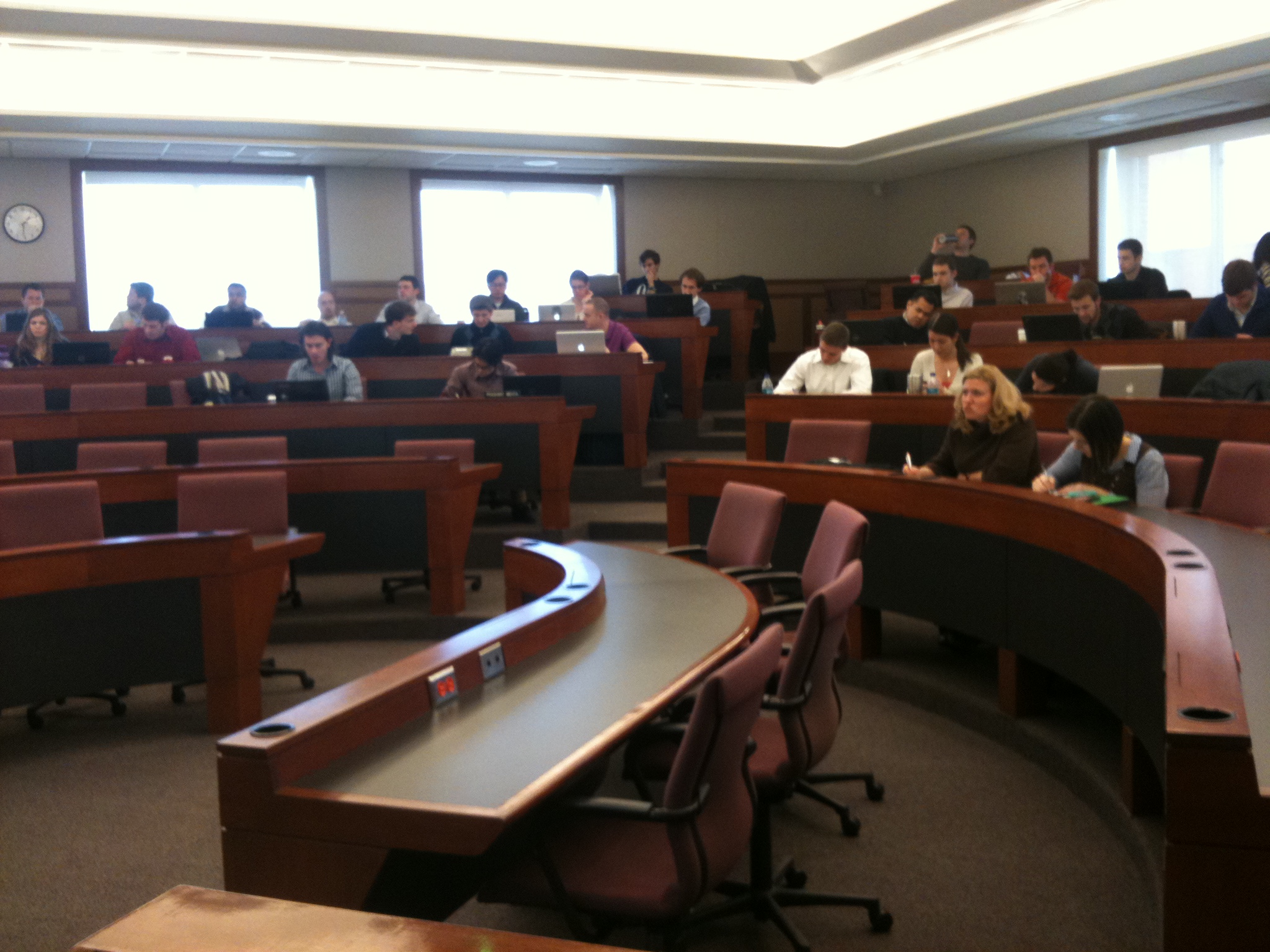 So she sat looking suspicious at me from the middle of the room. I was pretty sure she didn’t ‘buy’ what I was selling about the need to have your own signature story. After all, this is a group of highly motivated, intelligent and soon to be MBA’s from the Fisher College of Business.
There it came. “I don’t see any reason why anyone else needs to know our story,” she blurted out after seeing two colleagues get up and recite what they thought were each other’s “signature” stories.
I wanted to reply, “What do you have to hide?” But instead, posed the question back to the group. The answers I got were expected: So someone can refer you, so people know what you don’t want to do, so you can have a reputation in the field of your choice, and so on. I suspect her question was rooted in a disdain for people knowing her personal life. But we all have different stories about ourselves, and the one I tell about my tennis career or being a mom rarely comes out when I’m coaching or teaching public speaking, presentations or storytelling. It isn’t relevant.
But it was reinforced to me, in this Leadership and Professional Development Program class that I was teaching on Storytelling, that not everyone is comfortable telling their story – even if they want to.
That was evidenced later in the class by a young woman of Asian decent who was distraught. She wanted to share her story and her great achievements, but her culture, she explained, held her back. After a few minutes of explaining the different ways of overcoming that barrier, she found some freedom in being able to talk about the problems she’d solve, not just the trophies she’d won. She honored me with a blog post reflecting on this experience, and I’d like to honor her for being wholehearted, knowing she was vulnerable but had some interesting things to share. That, to me, was a great story in and of itself.
No CommentsConvert the conversation to a presentation
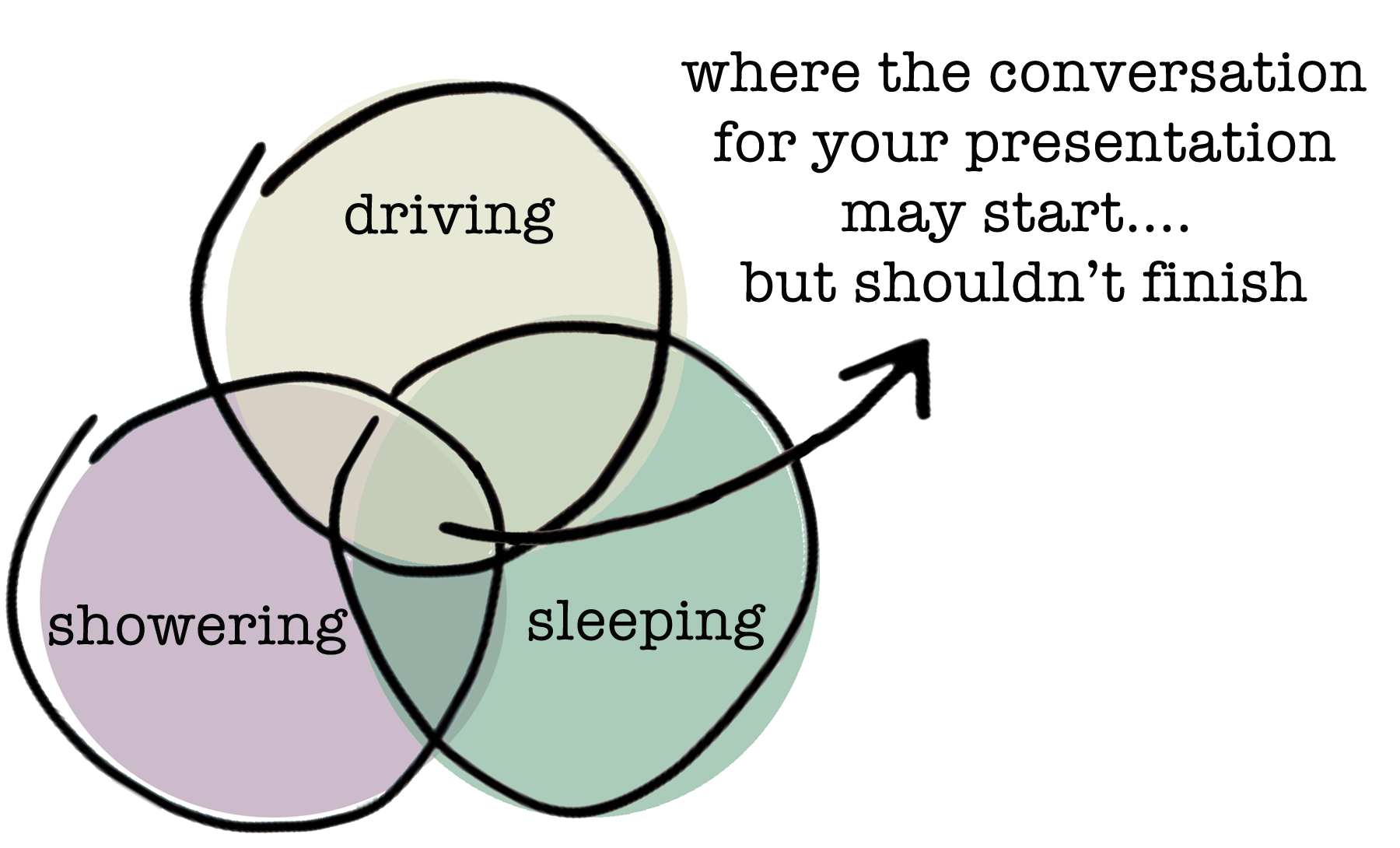
Every conversation we have is with ourselves. And on occasion it involves someone else.
Every time I repeat this quote, I get a good chuckle out of my audience. It’s the nervous kind, that says, uh, you are probably talking about me.
Last week when I was teaching a class of MBA students at the OSU Fisher College of Business on how to develop their signature stories as they enter the workforce, one of them got up and started giving her talk.
But it was really a conversation she was having with herself. It just happened to be in front of her 60 peers and me.
This month’s tip is one we take for granted: Convert the conversation to a presentation.
I see this all the time in my public speaking and presentation training, and not just with students. An executive will forget that they have a specific message to deliver and they just start rambling. And what they are really rambling off is that conversation they’ve been having – most likely with themselves. You know this pain.
So, are your presentations for your audience or yourself? Are they thoughtfully planned stories with which your audience can relate or… did they just get crafted from a dream, a book, a meeting or even disaster that happened to you recently?
Make sure when you draft your talk or presentation, it starts not with “what do I want to share today,” but rather, “what will my audience care to hear?”
And that’s when you become a convert. Your audience will be one too – a fan of your talk and your message.
No CommentsA new governor, MBA students and a homeless guy.
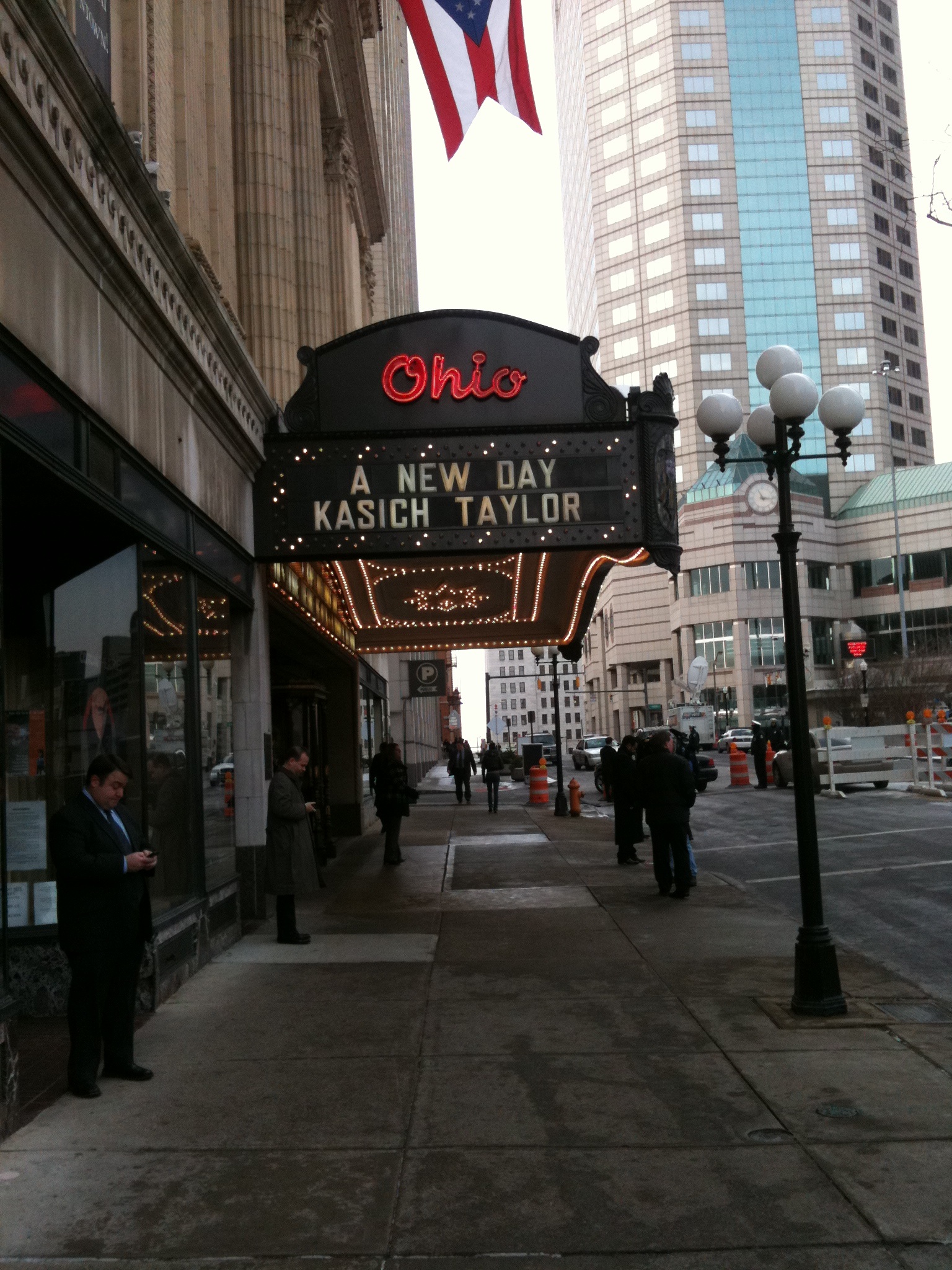
Yesterday I attended the 69th inauguration of a governor in Ohio, this time for Gov. John Kasich. His personal brand is immutable: he’s driven by a higher force, is fiercely devoted to his family, and is determined to not let special interests get in the way of fixing Ohio (we have a $10 billion deficit). His inauguration speech was a true extension of his convictions, telling small visual vignettes along the way that make his larger message memorable.
OSU Fisher College of Business – MBA Personal Branding Seminar from Articulation on Vimeo.
This comes comes on the heels of a half-day workshop I attended two days ago at the Fisher College of Business at the Ohio State University: A personal branding workshop for the first-year MBA students. Instructor and Innovation maven Mike Bills conducted this seminar to help assure that these students thought hard about what was their driving force, passions and characteristics so that when it comes down to selling themselves for a job, they aren’t just ‘speaking to the spec’ but really sharing what’s fueling their fire. (In February I get the privilege of teaching the follow-up seminar on bridging your brand to your story for these talented students).
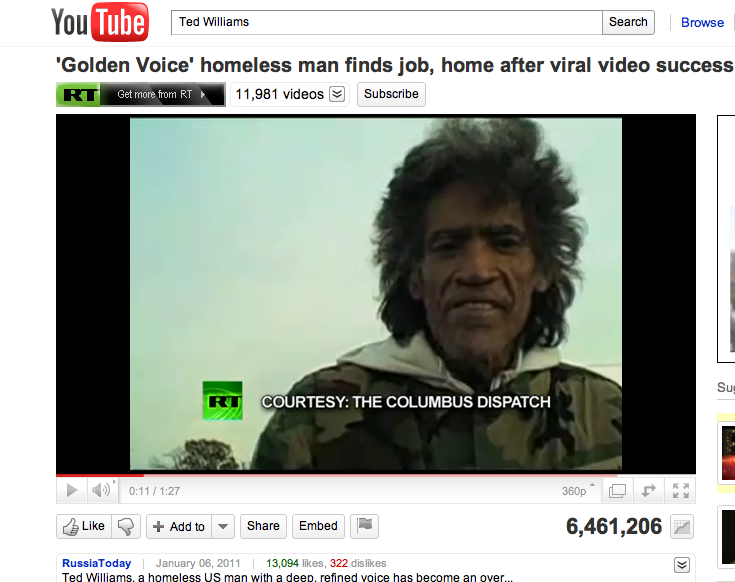
And last week in Columbus, we had the international spotlight blazing in our faces over a homeless guy with a golden voice named Ted Williams. A neighbor and Dispatch photographer Doral Chenoweth videotaped him at the side of a freeway sharing his deep, amazingly trained voice talent – only after stopping because the sign on the cardboard sheath read: “I have a golden voice.” Within a day he was being flown to appear on the Today Show and has job offers out of the woodwork.
On the surface, they all have nothing in common. The MBA students live here but many aren’t residents. Ted Williams couldn’t even prove last week that he was indeed a resident of Ohio. And yet John Kasich is not our most famous resident — as his inaugural address was indeed heard about 99% less than the Ted Williams video on Youtube.
But they have one important common bond: a personal brand that is expressed through a very unique story or narrative. Just to know what you like and what you want to do is one thing. To know how to bridge it into compelling ‘proof points,’ as Mike Bills would say or ‘defense’ as my collegue Wendy Hardman would claim is different. How do you extract the most critical examples that allow visualization and distinctiveness in your brand is what will be remembered.
So do you know your story? And better yet, can you tell it?
No CommentsWhen you find the pain.
While executing a public speaking and presentation training for rising executive at a national manufacturer recently, we inadvertently found a deep breaking point. While she broke down weeping we knew that it meant one thing: we found her pain.
Her boss had employed us for a day of evaluation and experimentation. She suspected that there was a problem with her ‘short presentation’ that she often gives at national conferences and to large clients. Her analysis was that it was “too practiced.”
Indeed, it was. But for an unsuspecting reason. She was bored. Deeply bored.
She had rehearsed it to the point that she didn’t have to think about it anymore. Her delivery wasn’t bad, actually. The content – no narrative transport, captivating visuals or concrete lessons – she admitted, it was painful. Awful. She felt trapped. She hated having to use slides. Didn’t know how to make it better. And while she was in a bit of a somber industry, it didn’t meant that she had to be.
Through some dialogue, we found out that she can do impressions of major performers (I don’t think I’ve seen a better “Proud Mary” by Tina Turner), teaches Zumba classes, still loves Lawrence Welk (a childhood obsession) and designs buttons, really intricate buttons. Oh, and when we asked if she’d ever written a narrative story, she said, like a screenplay? Yep, done that too. SO… How could she be BORED?
First, she said that everyone at the conferences uses power point. She felt compelled to do the same.
Second, she was constantly worried that the c-suite executives would be critical of her presentations. Even though, in reality, she was the only one with this intellectual property that she was presenting. (Remember you usually know 90% more than your audience).
Lastly, she had recurring nightmares about involving the audience in any way – for fear they would take over.
So… she got her slave-to-the-slide routine down to a science where no one could interject or add feedback to help make the presentation seem real and relevant. At one point she asked us a rhetorical question only to say “Oh, I never get any answers,” and moved on like a passing freight train. She didn’t want any answers.
We’ll follow back up with her in a month or so to see how the new version of her talk is going and if our menu of ‘creative spark’ techniques worked. One that is narrative-based without slides, lots of relevant case study/examples and some opportunities for audience feedback. And I bet, even if she isn’t comfortable with all the content – yet – she won’t be bored anymore.
No CommentsA presentation transformation: part 1
From fairy tales to extreme makeovers, who doesn’t love a good before-and-after story? HGTV has built an empire around ’em (with good reason) and TLC offers a veritable pantheon of makeover shows about babies, weddings and beauty.
So Ruth and I thought it would be fun and, more importantly, helpful and enlightening, to feature a before-and-after story of our own.
Our client, Alaina Sheer (aka Ms. Single Mama) is a sought-after social media and search expert, and a veteran radio broadcaster. In spite of her stellar credentials, Alaina needed our help to learn how to involve, inspire and impact her audience.
In part one of our five-part series, “A presentation story,” we’ll show you how we upped Alaina’s ar.tic.u.la.tion quotient to help transform her from knowledgeable guest speaker to powerhouse presenter.
If you watch Alaina’s “before” presentation, you’ll see an enthusiastic presenter with a lovely voice who knows (and loves) her subject matter. She wins on knowledge and being conversational but, alas, that’s not enough.
Here are 8 common presentation mistakes found in Alaina’s “before,” including four on presentation content and four on presentation style:
CONTENT
- No opening hook
- Confusing message points
- Hard-to-follow presentation flow
- Lack of storytelling
STYLE
- Closed body language
- Nervous or anxious movements
- Lack of eye contact
- Inappropriate pacing
Stay in touch here as we chronicle Alaina’s transformation. From the early returns, it will be a big one.
No CommentsUnplug it
In today’s New York Times, an illuminating story about multi-tasking adorned the front page. It’s disintegrating our ability to focus, the research argues (I would personally agree!). And indeed, checking email, texting, facebooking, skyping, webinaring – whatever the task – must all be but aside for the careful work that is presentation preparation.
I recently queried a PR manager on how her CEO prepared for a recent talk that was really well done. She said, “There’s a lot of practice and rehearsal, but we don’t see it.”
Exactly.
I’ve also just finished excellent book called Fierce Conversations. In it, author Susan Scott devotes a whole chapter for the need to have silence. In fact, she claims it’s the ‘heavy lifter’ in a conversation. In other words, it is the time you think, reflect and create your strategy, responses and answers. Those things are hard to do with your mouth open or email on, right?
One of her core principles is that every conversation is with yourself except when it involves someone else. After digesting that concept, think for a second about how you come to prepare for a talk.
Lots of little conversations, often alone. Reading, thinking, reviewing an idea. All with yourself. When you are rehearsing a talk – whether it is writing it out and reading it back, or practicing without notes in front of a mirror – it is with yourself.
But how can you even begin to achieve those conversations, that thoughtful reflective time while multi-tasking? You simply can’t. So as you think about your next talk, finish all of your research and then shut down everything that is plugged in. Live with the silence and your content and your presentation will reflect it.
1 Comment