


Live from the Desert.
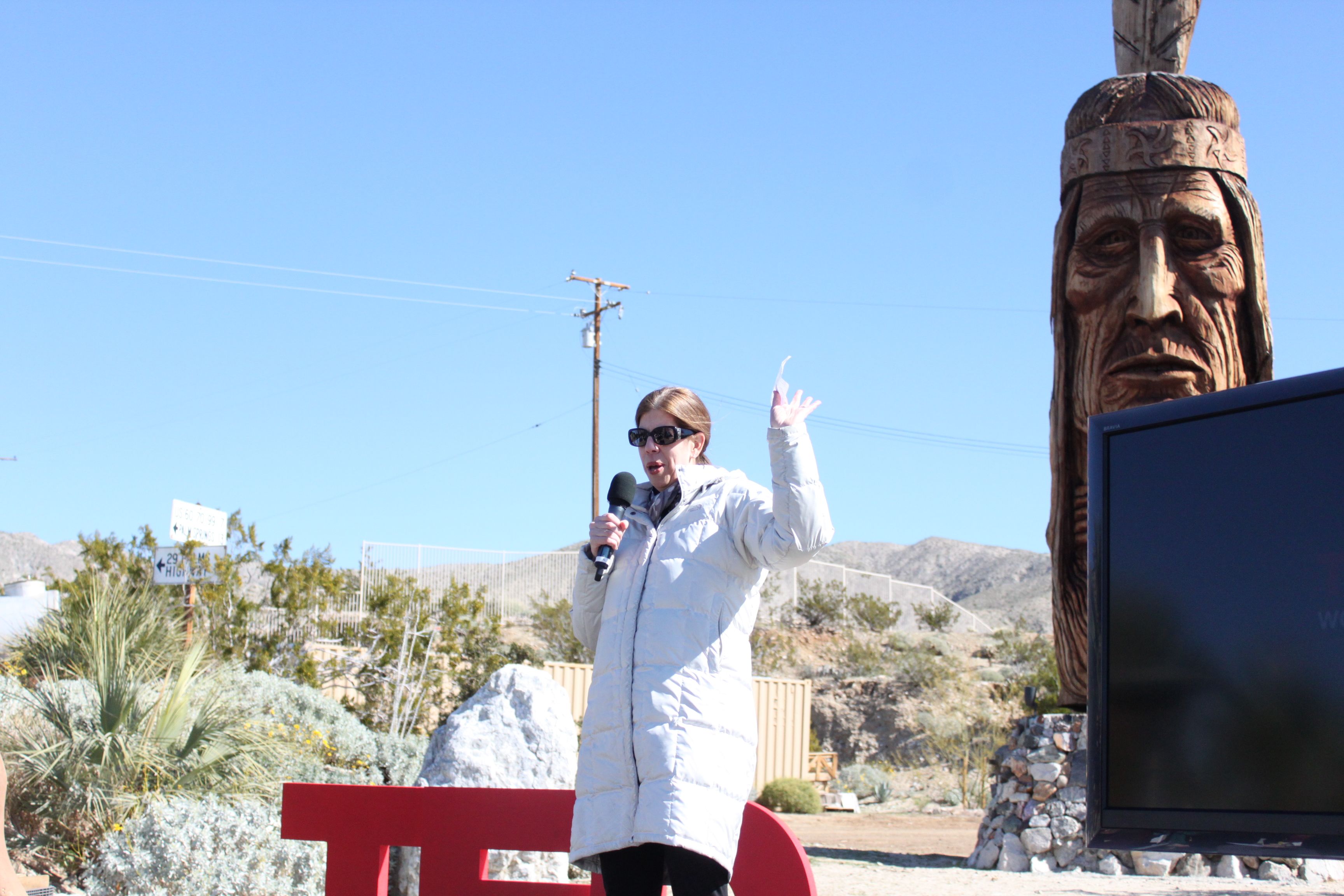 Palm Springs, the TED staff held a special workshop day for TEDx organizers. I gave a brief presentation on speaker preparation to my peers and
11 things to look forward to in 2011
Last year when we launched ar.tic.u.la.tion in mid-summer, we had no idea that we’d get the overwhelming response that we did. Between individual style coaching, signature story development advising and some unique teaching opportunities, we feel very lucky. But we know we need to work hard for that luck, so here are the top 11 things we’re focused on for 2011….(at least that we know of on this new year’s day!)
1. A vendor’s relationship with Nationwide, our hometown insurance conglomerate. We’ve been approved to work inside with their executives on speaking and presentations. This means if you work for Nationwide, you have a new source for presentation and public speaking coaching / training. If you work for another company and want the same opportunity, let us know!
2. A trip to TEDActive. This is the sister event to the ‘big’ TED, the annual event that showcases the best in new innovating thinking, trending and creations, in February. After two years of doing a wide variety of TEDx initiatives, I’m looking forward to being at a TED (okay, it’s not that hard seeing it’s in Palm Springs!)
3. Headed to the Experience Columbus (our visitor’s bureau) annual meeting in March? We’ll have a major role in shaping the stories and presentations for what will be a very different, well, experience, for them and their audience of 1000.
4. A teaching arrangement for some MBA workshops at the Fisher College of Business. We’ll start in January after Innovation Director Mike Bills does his personal branding seminar, I’ll follow up with translating that brand into your own story. You know, the answer you may struggle to find when you are asked during a job search process (or in that proverbial elevator), “What’s your story?”
5. Exploring new workshops and collaborations with Wendy Hardman, my alter-ego of presentation design. Watch for announcements early in the year. In the meantime, check out her site if you’ve got an annual meeting coming up and have a talent deficit on your team for understanding everything about presentation slide design.
6. Big ideas around TEDxColumbus. Nancy Kramer and I are noodling hard on this one. No news yet, but we are debating very exciting opportunities around what has become a very successful showcase of amazing local talent and their ideas worth spreading.
7. Weekly blog posts (right here!) on ar.tic.u.la.tion. We preach it, now it’s time for us to step up and live it. Our editorial calendar is already packed for the first quarter!
8. Live talk critiques. Once a month, we’ll attend a talk, speech or lecture and post our feedback on style, content, memorability, audience engagement, and more. If you want to nominate a talk to be critiqued, just email me.
9. A very personal one: Exchange of services with Amy Marzluff, a health coach. While I learn from her best integrative health techniques, she’s getting brushed up on her speaking skills. While I learn to diversify our new Gluten Free life (due to a child being diagnosed with celiac last year), she’s reaching new bounds with her workshops and seminars. I’m so excited about this partnership.
10. Monthly tip emails. At last! We didn’t quite get these off the ground this year, but already have the many tips already in line. If you want to subscribe, just enter your email here. We promise they will be brief and informative! We’ll include some of our favorite new reads and of course, TED talks.
11. Meeting YOUR needs. Please let us know if you would like a workshop, brown bag idea lunch or our signature one-on-one ar.tic.u.la.tion coaching for you or your associates. We have a variety of workshops, curricula and exercises ready to adapt to your specific situation.
And with that, Happy New Year. May it be filled with plenty of time and thought to create your own spectacular public speaking moments.
No CommentsWhen you find the pain.
While executing a public speaking and presentation training for rising executive at a national manufacturer recently, we inadvertently found a deep breaking point. While she broke down weeping we knew that it meant one thing: we found her pain.
Her boss had employed us for a day of evaluation and experimentation. She suspected that there was a problem with her ‘short presentation’ that she often gives at national conferences and to large clients. Her analysis was that it was “too practiced.”
Indeed, it was. But for an unsuspecting reason. She was bored. Deeply bored.
She had rehearsed it to the point that she didn’t have to think about it anymore. Her delivery wasn’t bad, actually. The content – no narrative transport, captivating visuals or concrete lessons – she admitted, it was painful. Awful. She felt trapped. She hated having to use slides. Didn’t know how to make it better. And while she was in a bit of a somber industry, it didn’t meant that she had to be.
Through some dialogue, we found out that she can do impressions of major performers (I don’t think I’ve seen a better “Proud Mary” by Tina Turner), teaches Zumba classes, still loves Lawrence Welk (a childhood obsession) and designs buttons, really intricate buttons. Oh, and when we asked if she’d ever written a narrative story, she said, like a screenplay? Yep, done that too. SO… How could she be BORED?
First, she said that everyone at the conferences uses power point. She felt compelled to do the same.
Second, she was constantly worried that the c-suite executives would be critical of her presentations. Even though, in reality, she was the only one with this intellectual property that she was presenting. (Remember you usually know 90% more than your audience).
Lastly, she had recurring nightmares about involving the audience in any way – for fear they would take over.
So… she got her slave-to-the-slide routine down to a science where no one could interject or add feedback to help make the presentation seem real and relevant. At one point she asked us a rhetorical question only to say “Oh, I never get any answers,” and moved on like a passing freight train. She didn’t want any answers.
We’ll follow back up with her in a month or so to see how the new version of her talk is going and if our menu of ‘creative spark’ techniques worked. One that is narrative-based without slides, lots of relevant case study/examples and some opportunities for audience feedback. And I bet, even if she isn’t comfortable with all the content – yet – she won’t be bored anymore.
No CommentsA presentation transformation: part 2.
On Wednesday this week, Jan and I attended the ‘final exam’ in Alaina Sheer’s presentation transformation. I hadn’t written about our style and delivery session that we had a few weeks ago as I knew there was some additional work to be done before she was really ready to present. Tuesday night we had a chance to review the entire talk together and I saw the difference.
So what was it?
For me, it was grounded in her attention to her story. She knew it, had lived with it and felt passionate about it. Most importantly, it connected with for her audience. As a result, she was able to start to pay attention to her delivery. Before, her content was disheveled and somewhat irrelevant to her audience, so her delivery had no ground on which to stand.
When we get a good video clip to share next week, we’ll post it for you to see the before and after. In the meantime, we had a really fabulous time watching the following on Wednesday:
For her content organization, storytelling and overall message – she listened carefully to Jan’s advice. Her opening hook was interesting and strong, she kept to the rule of three for some of her factual-heavy learning modules, her examples were applicable and well versed, and most importantly, she tied it together beautifully.
For her public speaking style and delivery, we saw immense improvement. She was no longer a slave to the slide or lurking only behind her laptop. She took some vulnerable steps to be more connected with the audience and as a result, she was rewarded. They were compelled and engaged from start to finish (a far cry from the original talk where she reported a disappointing response) and had thoughtful responses and questions upon her conclusion.
Because Alaina has some background in radio, she is able to tease you with a very smooth voice. Before we engaged with her, often she was rushed, her words melded together without necessary pausing for the audience to follow and process. In this final presentation, she demonstrated an increased awareness of those traits and continues to work hard to assure they aren’t what is remembered.
Thanks to Alaina for being so brave to share this experience with us and for giving us a chance to demonstrate how proper preparation decides the fate of a talk.
No CommentsA presentation transformation: part 1
From fairy tales to extreme makeovers, who doesn’t love a good before-and-after story? HGTV has built an empire around ’em (with good reason) and TLC offers a veritable pantheon of makeover shows about babies, weddings and beauty.
So Ruth and I thought it would be fun and, more importantly, helpful and enlightening, to feature a before-and-after story of our own.
Our client, Alaina Sheer (aka Ms. Single Mama) is a sought-after social media and search expert, and a veteran radio broadcaster. In spite of her stellar credentials, Alaina needed our help to learn how to involve, inspire and impact her audience.
In part one of our five-part series, “A presentation story,” we’ll show you how we upped Alaina’s ar.tic.u.la.tion quotient to help transform her from knowledgeable guest speaker to powerhouse presenter.
If you watch Alaina’s “before” presentation, you’ll see an enthusiastic presenter with a lovely voice who knows (and loves) her subject matter. She wins on knowledge and being conversational but, alas, that’s not enough.
Here are 8 common presentation mistakes found in Alaina’s “before,” including four on presentation content and four on presentation style:
CONTENT
- No opening hook
- Confusing message points
- Hard-to-follow presentation flow
- Lack of storytelling
STYLE
- Closed body language
- Nervous or anxious movements
- Lack of eye contact
- Inappropriate pacing
Stay in touch here as we chronicle Alaina’s transformation. From the early returns, it will be a big one.
No CommentsUnplug it
In today’s New York Times, an illuminating story about multi-tasking adorned the front page. It’s disintegrating our ability to focus, the research argues (I would personally agree!). And indeed, checking email, texting, facebooking, skyping, webinaring – whatever the task – must all be but aside for the careful work that is presentation preparation.
I recently queried a PR manager on how her CEO prepared for a recent talk that was really well done. She said, “There’s a lot of practice and rehearsal, but we don’t see it.”
Exactly.
I’ve also just finished excellent book called Fierce Conversations. In it, author Susan Scott devotes a whole chapter for the need to have silence. In fact, she claims it’s the ‘heavy lifter’ in a conversation. In other words, it is the time you think, reflect and create your strategy, responses and answers. Those things are hard to do with your mouth open or email on, right?
One of her core principles is that every conversation is with yourself except when it involves someone else. After digesting that concept, think for a second about how you come to prepare for a talk.
Lots of little conversations, often alone. Reading, thinking, reviewing an idea. All with yourself. When you are rehearsing a talk – whether it is writing it out and reading it back, or practicing without notes in front of a mirror – it is with yourself.
But how can you even begin to achieve those conversations, that thoughtful reflective time while multi-tasking? You simply can’t. So as you think about your next talk, finish all of your research and then shut down everything that is plugged in. Live with the silence and your content and your presentation will reflect it.
1 CommentFrom Jan: Next chapter
The year was 1989. I was a newlywed armed with a degree from Otterbein in Speech Communications when I started working at Ohio Magazine. My first day on the job they gave me a stack of magazines and said, “Here. Read these.”
Read these? Read all day long and you’ll pay me???
I thought I’d won the lottery. Read More
No CommentsFrom Ruth: 25 years in the making
San Diego, August, 1996: I was sequestered for a day in the speechwriters’ room behind the big stage at the Republican National Convention. I was there to “traffic” a speech. I was charged to make sure the one that was supposed to scroll on the teleprompter was the one my ‘principal’ was expecting to give, er, read in front of hundreds of thousands of TV viewers. Read More
No CommentsSo you have invited someone to talk, eh?
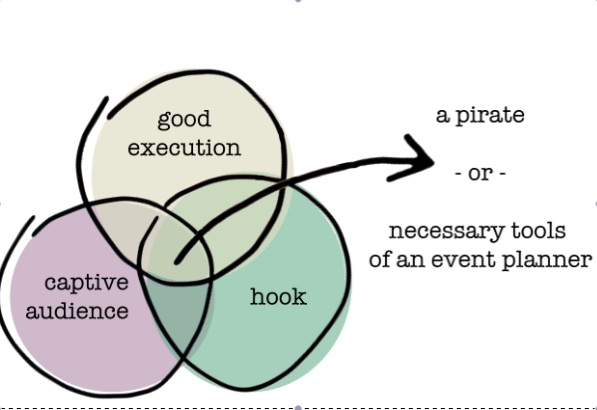
This is a note to organizers. Your role in getting a speaker ready to talk is as important as the speaker’s own preparation.
In the last post about the “What If” event, there was a fatal flaw on behalf of the organizers. I thought I’d illuminate our top three forget-me-nots that every organizer needs to know. Read More