


Live from the Desert.
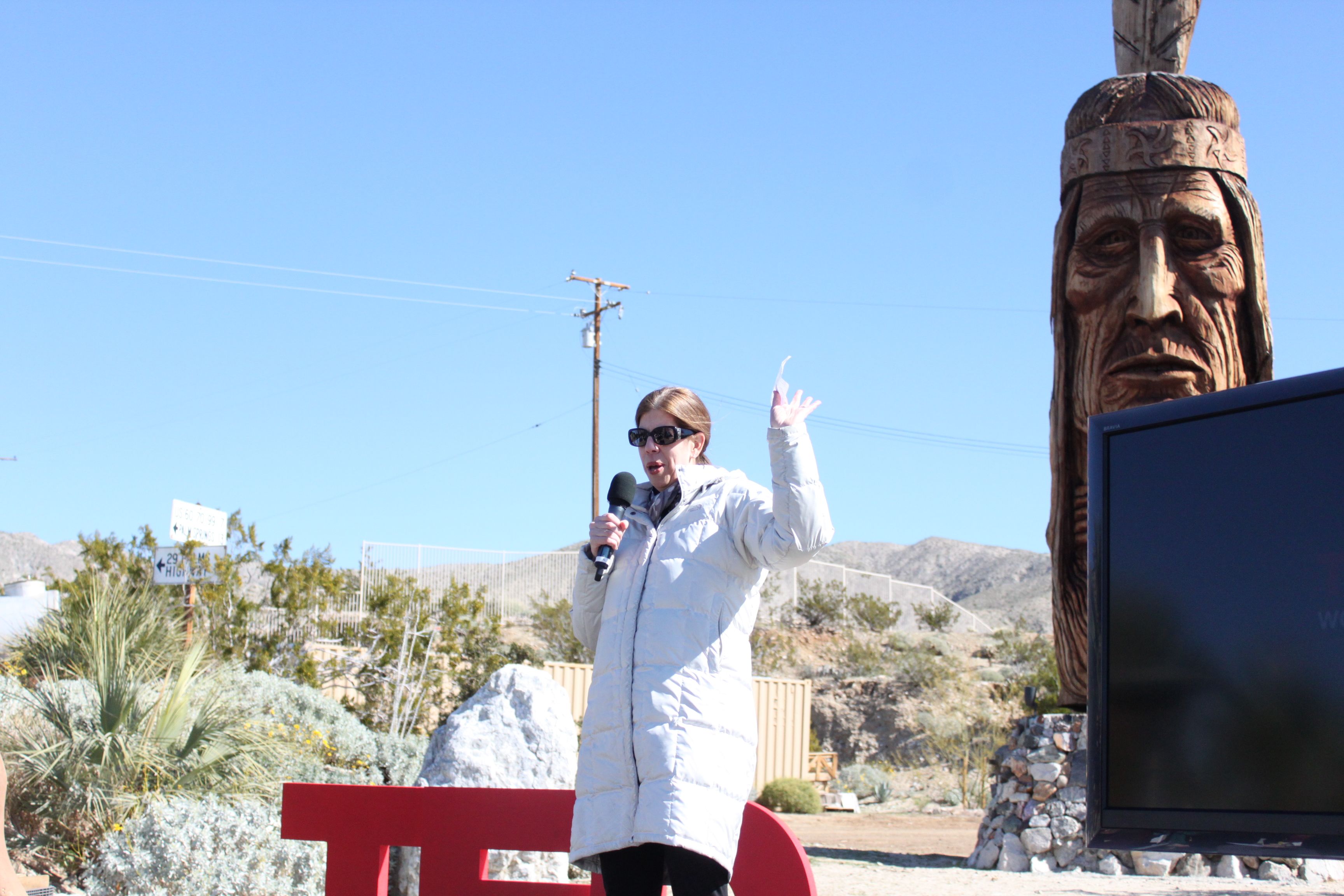 Palm Springs, the TED staff held a special workshop day for TEDx organizers. I gave a brief presentation on speaker preparation to my peers and
Convert the conversation to a presentation
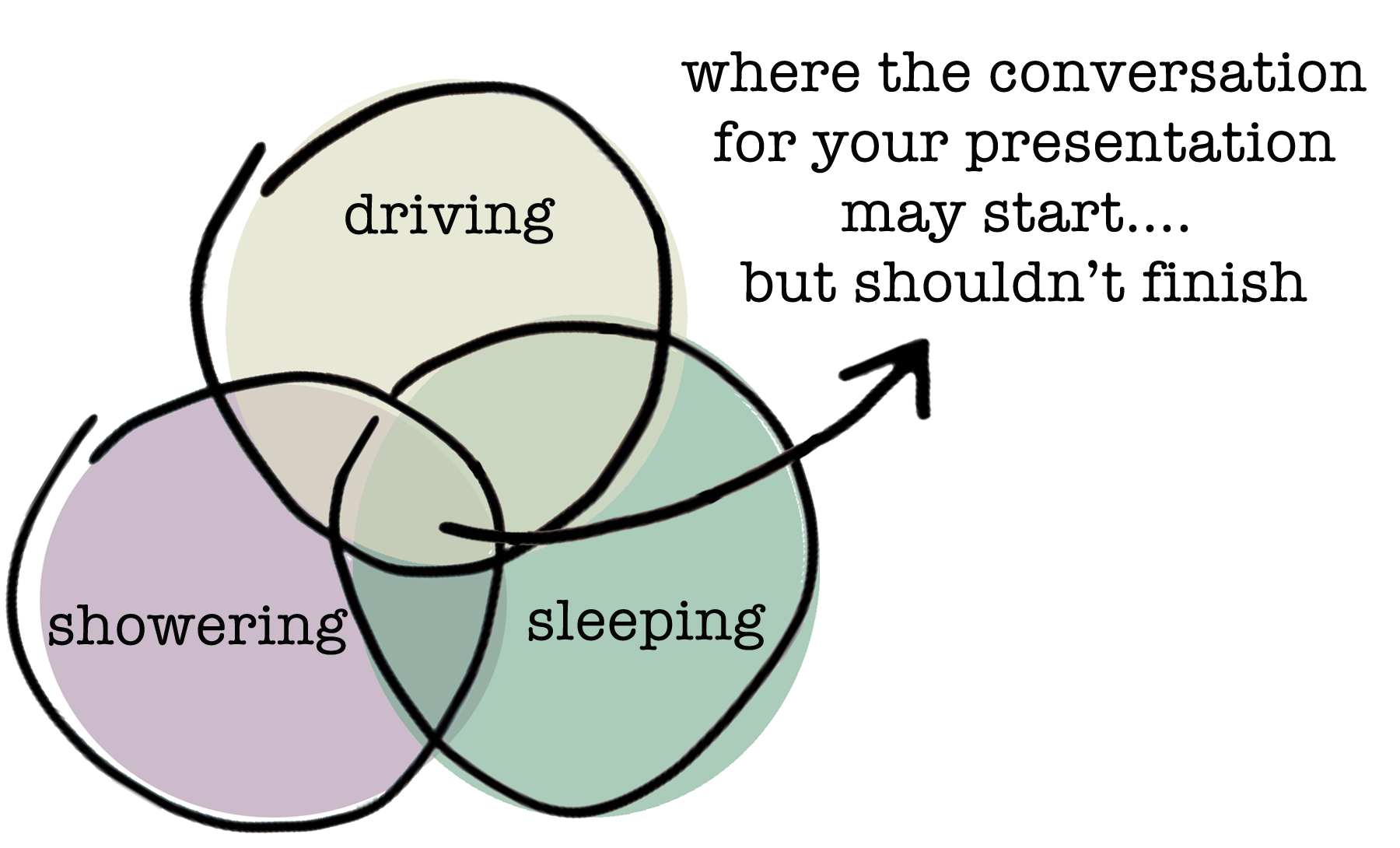
Every conversation we have is with ourselves. And on occasion it involves someone else.
Every time I repeat this quote, I get a good chuckle out of my audience. It’s the nervous kind, that says, uh, you are probably talking about me.
Last week when I was teaching a class of MBA students at the OSU Fisher College of Business on how to develop their signature stories as they enter the workforce, one of them got up and started giving her talk.
But it was really a conversation she was having with herself. It just happened to be in front of her 60 peers and me.
This month’s tip is one we take for granted: Convert the conversation to a presentation.
I see this all the time in my public speaking and presentation training, and not just with students. An executive will forget that they have a specific message to deliver and they just start rambling. And what they are really rambling off is that conversation they’ve been having – most likely with themselves. You know this pain.
So, are your presentations for your audience or yourself? Are they thoughtfully planned stories with which your audience can relate or… did they just get crafted from a dream, a book, a meeting or even disaster that happened to you recently?
Make sure when you draft your talk or presentation, it starts not with “what do I want to share today,” but rather, “what will my audience care to hear?”
And that’s when you become a convert. Your audience will be one too – a fan of your talk and your message.
No CommentsFail Better, for sure!
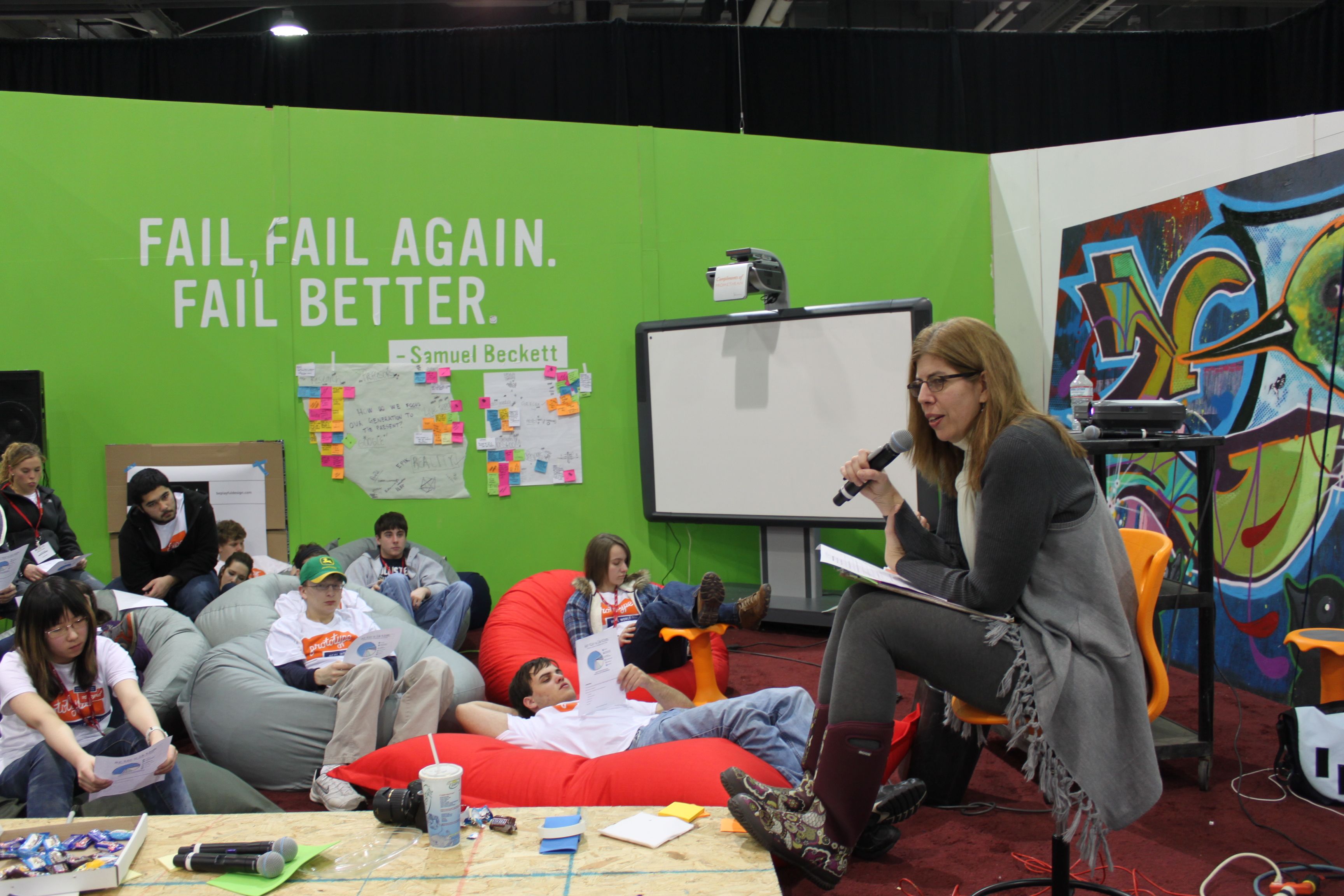 This group of junior and high school students took over a big, open, colorful studio space filled with German-designed, state-of-the-art, learning-inspired furniture created within the confines of the convention hall / trade show, and were broken down into six teams and given a challenge: design a solution to any problem you want to solve. You’ll see the mantra that hovered over them daily: Fail, Fail Again. Fail Better!
Over the course of the three days, they are lightly guided by outstanding designers and educators organized from Be Playful, an collaborative consultancy working on re-designing learning environments to be more innovative and creative. It should be noted that this “Prototype” was a sample of more sustainable endeavor Be Playful is testing.The e-tech Ohio conference where they were being hosted was a great partner in helping them incubate it – and gave otherwise sullen attendees a live, interactive glimpse of how learning can be dynamic and well, playful.
Their assignment was to come up with a 15 minute presentation to unveil both their perceived problem (half the battle, right?) and recommended solution to a sophisticated jury of professionals from the design, arts, information technology, retail planning, media and more. My role was to address the 30+ students to prepare them for their juried presentation.
At the end of my short overview of a compelling pitch, which included using the five key questions on how to build a story (any story) from Save the Cat , I was then peppered with questions. Many questions. I found them to have a beautiful naiveté that we take for granted when we’re older, more sullen and feeling like giving a presentation is more a chore than an exploration and learning.
I thought I’d share a sampling of those queries, with a summary of my answer beneath each.
Q: We have 5 great ideas, how do you expect us to come up with one?
A: Then you aren’t ready to present. The jury wants to hear one great idea with some strong proof points. If you give them five, you haven’t found the right theme or connection between the ideas — OR you haven’t killed enough of your little darlings.
Q: What happens if you have a really good idea but not a great presentation? What if is is all over the map and sloppy? Do you think we’ll still have a chance of winning?
A: You may come in second, but rarely will you win. Because someone else will likely nail both the idea and the presentation and outshine you.
Q: Why shouldn’t we introduce ourselves at the beginning of our presentation? How will the jury know who we are?
A: Earlier I advocated for a strong opening hook, one that grabbed the jury from the first minute and made them want to follow the story. If you want your opening hook to be “My name is Kate, his name is Bill and that over there is Susan” feel free. But wouldn’t it be better for them to hear your great idea and why it matters at the top — since you should always give them the most important information first? There will always be time later in the presentation to explain who you are since that matters less than the idea you are presenting – at least for the first few minutes.
Q: How do you know who should be your team spokesperson?
A: As you look around at your team I can see the anxiety of group dynamics trying to decide, who should talk? This is a part of the leadership process you should embrace in this workshop! Here’s a few non-negotiables that I’d look for in choosing your spokesperson:
– Someone that can speak with limited notes (to assure to stay on message) but not someone who has to read.
– Someone who is not nervous and speaks too fast or with too many gesticulations (a clear sign of nervousness)
– Someone who is not afraid to engage with the jurors in a conversation – ie look them in the eye, talk to them one-on-one
Q: Then what should the rest of the team do if we aren’t speaking?
A: Have you ever seen a spouse on stage next to their politician wife or husband? They are supportive. They look engaged. They try to connect with the audience as well. The completeness of your team relies on your being present, too. Even if you aren’t uttering a word. Conversely, you can be the Q & A team – providing subject matter expertise or supporting your spokesperson to give him/her a break.
Q: What is better, a presentation with or without visuals?
A; If you can’t tell the story of your idea without visuals, then you don’t need any — yet. Visuals are used to SUPPORT your story / pitch – not to make it for you. The more compelling the story, the less visuals you need. I challenge the efficacy of slides in the Pecha Kucha model but know it’s helpful when a specially designed visual of a complex idea can be real aid in the oral delivery.
Q: How do we interact with the judges? They want us to “get to know them” but I’m not sure what to do with information we find out.
A: Wouldn’t it be helpful to know if all of your judges had PhDs in electrical engineering when your idea you are presenting has to do with dance therapy? Perhaps you’ll need to explain some more baseline information than if they were all advanced degree holders in dance therapy. It’s the first place you start in preparing your presentation: know they audience. And during the presentation, if you can call out someone that may have a relevance to your topic, which is one of the five rules of a good story: it’s relevant to me. That leaves only 4 more to go!
Q: How much time should we take for the presentation vs. allow for judges questions?
A: Since you were given 15 minutes total, factor in that you want them to be engaged — and be encouraged to ask questions. So make the pitch for half the time. But then again, if you have a complex idea to share, it may require most of the time. I’d suggest that, whatever you do, make sure you stop at 15. It’s the 16th minute that will cause you to be disqualified if all other teams stick to the basic rules. That’s when you know you have failed. Next time, fail better!
11 things to look forward to in 2011
Last year when we launched ar.tic.u.la.tion in mid-summer, we had no idea that we’d get the overwhelming response that we did. Between individual style coaching, signature story development advising and some unique teaching opportunities, we feel very lucky. But we know we need to work hard for that luck, so here are the top 11 things we’re focused on for 2011….(at least that we know of on this new year’s day!)
1. A vendor’s relationship with Nationwide, our hometown insurance conglomerate. We’ve been approved to work inside with their executives on speaking and presentations. This means if you work for Nationwide, you have a new source for presentation and public speaking coaching / training. If you work for another company and want the same opportunity, let us know!
2. A trip to TEDActive. This is the sister event to the ‘big’ TED, the annual event that showcases the best in new innovating thinking, trending and creations, in February. After two years of doing a wide variety of TEDx initiatives, I’m looking forward to being at a TED (okay, it’s not that hard seeing it’s in Palm Springs!)
3. Headed to the Experience Columbus (our visitor’s bureau) annual meeting in March? We’ll have a major role in shaping the stories and presentations for what will be a very different, well, experience, for them and their audience of 1000.
4. A teaching arrangement for some MBA workshops at the Fisher College of Business. We’ll start in January after Innovation Director Mike Bills does his personal branding seminar, I’ll follow up with translating that brand into your own story. You know, the answer you may struggle to find when you are asked during a job search process (or in that proverbial elevator), “What’s your story?”
5. Exploring new workshops and collaborations with Wendy Hardman, my alter-ego of presentation design. Watch for announcements early in the year. In the meantime, check out her site if you’ve got an annual meeting coming up and have a talent deficit on your team for understanding everything about presentation slide design.
6. Big ideas around TEDxColumbus. Nancy Kramer and I are noodling hard on this one. No news yet, but we are debating very exciting opportunities around what has become a very successful showcase of amazing local talent and their ideas worth spreading.
7. Weekly blog posts (right here!) on ar.tic.u.la.tion. We preach it, now it’s time for us to step up and live it. Our editorial calendar is already packed for the first quarter!
8. Live talk critiques. Once a month, we’ll attend a talk, speech or lecture and post our feedback on style, content, memorability, audience engagement, and more. If you want to nominate a talk to be critiqued, just email me.
9. A very personal one: Exchange of services with Amy Marzluff, a health coach. While I learn from her best integrative health techniques, she’s getting brushed up on her speaking skills. While I learn to diversify our new Gluten Free life (due to a child being diagnosed with celiac last year), she’s reaching new bounds with her workshops and seminars. I’m so excited about this partnership.
10. Monthly tip emails. At last! We didn’t quite get these off the ground this year, but already have the many tips already in line. If you want to subscribe, just enter your email here. We promise they will be brief and informative! We’ll include some of our favorite new reads and of course, TED talks.
11. Meeting YOUR needs. Please let us know if you would like a workshop, brown bag idea lunch or our signature one-on-one ar.tic.u.la.tion coaching for you or your associates. We have a variety of workshops, curricula and exercises ready to adapt to your specific situation.
And with that, Happy New Year. May it be filled with plenty of time and thought to create your own spectacular public speaking moments.
No CommentsWhen you find the pain.
While executing a public speaking and presentation training for rising executive at a national manufacturer recently, we inadvertently found a deep breaking point. While she broke down weeping we knew that it meant one thing: we found her pain.
Her boss had employed us for a day of evaluation and experimentation. She suspected that there was a problem with her ‘short presentation’ that she often gives at national conferences and to large clients. Her analysis was that it was “too practiced.”
Indeed, it was. But for an unsuspecting reason. She was bored. Deeply bored.
She had rehearsed it to the point that she didn’t have to think about it anymore. Her delivery wasn’t bad, actually. The content – no narrative transport, captivating visuals or concrete lessons – she admitted, it was painful. Awful. She felt trapped. She hated having to use slides. Didn’t know how to make it better. And while she was in a bit of a somber industry, it didn’t meant that she had to be.
Through some dialogue, we found out that she can do impressions of major performers (I don’t think I’ve seen a better “Proud Mary” by Tina Turner), teaches Zumba classes, still loves Lawrence Welk (a childhood obsession) and designs buttons, really intricate buttons. Oh, and when we asked if she’d ever written a narrative story, she said, like a screenplay? Yep, done that too. SO… How could she be BORED?
First, she said that everyone at the conferences uses power point. She felt compelled to do the same.
Second, she was constantly worried that the c-suite executives would be critical of her presentations. Even though, in reality, she was the only one with this intellectual property that she was presenting. (Remember you usually know 90% more than your audience).
Lastly, she had recurring nightmares about involving the audience in any way – for fear they would take over.
So… she got her slave-to-the-slide routine down to a science where no one could interject or add feedback to help make the presentation seem real and relevant. At one point she asked us a rhetorical question only to say “Oh, I never get any answers,” and moved on like a passing freight train. She didn’t want any answers.
We’ll follow back up with her in a month or so to see how the new version of her talk is going and if our menu of ‘creative spark’ techniques worked. One that is narrative-based without slides, lots of relevant case study/examples and some opportunities for audience feedback. And I bet, even if she isn’t comfortable with all the content – yet – she won’t be bored anymore.
No CommentsOn Pausing.
A college professor commented that his students were giving him a wide range of feedback on his lectures.
“Some students think I’m the second coming and others think I’m a train wreck. What gives?”
Having heard him speak at a public forum and also having had many conversations with him, the answer was pretty simple.
He never really stops.
His brain is really overflowing with insight, experience, ideas and inspiration. What he’s having a hard time doing is knowing that his audience processes his words differently.
Those that think he’s terrific are enthralled with his cadence and can keep up with the ideas. They crave that pace and are energized by it.
Those that want to run out need to process ideas a bit more slowly, or maybe, even at a regular pace.
Keeping in mind we didn’t want to ruin his enthusiastic banter, I offered a solution: build a suite of tools that force you to pause or stop. Here are some for him, (and you if you have this issue), to consider using:
A. Within your outline, write the word STOP or PAUSE (pretty obvious, eh?) what might be every 3-4 minutes.
B. Take a drink of water and don’t be in a race to start talking after you have swallowed. Ease back into the thought slowly.
C. Insert points where you offer opportunities to ask questions. Toss the dialogue around the room instead of only from your voice.
D. Build in more formal discussion opportunities among the group. Invite someone to come to the chalkboard as you facilitate a brainstorm or solve a problem.
E. Intentionally invite someone to co-present with you when possible. This takes more preparation, but it does have the built in benefit of the pause.
F. Recap your thoughts in your conclusion. This will allow those in the audience who might have missed them the first time to hear them in summary.
Remember, talking without pausing is much like reading without punctuation. The brain doesn’t have the ability to process very easily, which causes your presentation to essentially be unheard.
No CommentsA presentation transformation: part 1
From fairy tales to extreme makeovers, who doesn’t love a good before-and-after story? HGTV has built an empire around ’em (with good reason) and TLC offers a veritable pantheon of makeover shows about babies, weddings and beauty.
So Ruth and I thought it would be fun and, more importantly, helpful and enlightening, to feature a before-and-after story of our own.
Our client, Alaina Sheer (aka Ms. Single Mama) is a sought-after social media and search expert, and a veteran radio broadcaster. In spite of her stellar credentials, Alaina needed our help to learn how to involve, inspire and impact her audience.
In part one of our five-part series, “A presentation story,” we’ll show you how we upped Alaina’s ar.tic.u.la.tion quotient to help transform her from knowledgeable guest speaker to powerhouse presenter.
If you watch Alaina’s “before” presentation, you’ll see an enthusiastic presenter with a lovely voice who knows (and loves) her subject matter. She wins on knowledge and being conversational but, alas, that’s not enough.
Here are 8 common presentation mistakes found in Alaina’s “before,” including four on presentation content and four on presentation style:
CONTENT
- No opening hook
- Confusing message points
- Hard-to-follow presentation flow
- Lack of storytelling
STYLE
- Closed body language
- Nervous or anxious movements
- Lack of eye contact
- Inappropriate pacing
Stay in touch here as we chronicle Alaina’s transformation. From the early returns, it will be a big one.
No Comments