


How Kit Kat led to TED, told ala Pecha Kucha.
So a few years ago I wrote this blog post on how I thought the Pecha Kucha (Japanese for Chit-Chat) was a fun format for an audience but a really tough one for a speaker. It dictates you deliver a talk with 20 slides on a timer for 20 seconds a slide.
So last summer when I was invited to give a PK talk, I told them I’d do it without slides. They said no : I had to use slides.
So I sent a black slide and asked them to play it 20 times. They said no : I had to show slide progression.

The dot that moved 20 times.
So I sent a slide that looked like this and had the dot rotate around the circle — one dot movement per each of the 20 slides. And they said yes: finally.
My motivation was that I wanted to tell a very personal story as the guidelines are pretty loose on what content you can bring forward as long as it shows your passion. I didn’t feel that slides would augment my story, in fact, I thought they would distract. And I didn’t ever want to turn my back to the audience to check if I was on the right slide (Rule #1 of public speaking) which is what happens when the slides are on a timer.
So now that I’m watching the video (posted below, don’t judge the quality!), I see that they may have had a confidence monitor (at my feet). A confidence monitor is what we call the screen facing a speaker to demonstrate the slides playing to the audience. True fact: I never saw the monitor as I am apt to look at the audience, not the floor. And it didn’t matter, since I timed my talk to be 6:40 (the time of 20 slides x 20 seconds) and just let it rip. It wasn’t until about 5 minutes in that I even remembered I had slides because I never practiced with them or needed them to prompt my story.
A good friend wrote on my Facebook page that he thought my slides were on the fritz…until the end. So watch for yourself and see how I gave a Pecha Kucha talk “without” slides. Which allowed me to focus on the thing that did matter: my passion and my story.
How I found my Kit Kat. from Articulation on Vimeo.
No Comments
The Value of ‘Values in Action’ Stories
So I guess if you don’t have company values, it would be hard to tell any “values in action” stories about them. But the reality is, we all drive our businesses on a set of SOME values – and we behave consistent with them every day. Harvesting those stories that best demonstrate how you live out your values needs to be an intentional effort, however, so they can be shared and passed around — building trust, resilience, reputation and maintaining a vision.
At the 2012 Annual Meeting of the Greater Columbus Chamber of Commerce, resource interactive Founder Nancy Kramer gave a resonating and lively speech reflecting on her company’s values and how they positioned resource for sustainable growth. We were fortunate to have the opportunity to partner with her on this talk, which, as you can tell if you watch through to the end, made it one memorable event.
Once you are done watching the talk, see if you can repeat back the stories she uses to demonstrate their values.
1 CommentThe Keynote: One Pathway
While we have been involved in hundreds of keynote addresses over the years, I thought it was time to document the pathway of one from start to finish. Each is different of course based on the speaker, event and audience. We adapt for each and in this case, we’re working with the founder of a company who has been invited to give the keynote at an annual Chamber of Commerce Meeting.
We started planning yesterday by a reviewing previous talks she’d given to some smaller groups to build upon content with which she was comfortable. It was primarily a listening exercise to understand ‘her story’ and elements we can pull, twist and bend as we fashion a talk specifically for this event.
Then came the question that usually gets a pregnant pause response: “What question are you answering that’s on the audience’s mind?” ( I don’t insist on answering the question, I just want to define what it is.)
For an event like an annual meeting, that’s difficult. Very difficult. People come to hear updates on the state of the chamber (obligatory), to see and be seen (everyone’s a player), to generally support the chamber and the community (be a good servants). Do they come to hear the keynote? Well, they may not come if there wasn’t a keynote — but the million dollar question for a speaker preparing a talk: will the audience really listen? Do we really care?
For this event, it will be a morning breakfast. There will be combative fights for coffee, the eggs will be augmented by something sugary, and everyone will begin checking their blackberries about 20 minutes after they’ve taken a seat. Yep, we’ve all been there.
Motivations of attendees will range from networking to gossiping to gripping and grinning. Some will be interested in who is sitting across from them at that imposing white-linen tableclothed round table but….shoot, no time to scream across the bacon and OJ, the program is starting. Time to be quiet. At least with our mouths and ringers (never said anything about shutting down our brains).
So as a speaker, while it seems like a sedate, boring, professional crowd, in fact, there’s a melee going on. It will be her job to break through the clutter and tell a few stories that will wrap up a high-value idea with a take-away that will taste better than the week-old Chinese in my fridge.
We began by building with a hierarchy of messages that we spent 2 hours brainstorming. We asked “so what” about a dozen times and struggled, unexpectedly, to dig for the most resonating truth (’cause of course we don’t lie!). Next, I’ll help her to organize the ideas and then build an outline (but don’t mess those steps with each other).
We will proceed on the following assumption that the questions the audience wants answered are
A) Who are you and why are you worthy to be talking to me this early morning.
B) What will you tell me that makes me want to like and believe you?
C) What can you tell me that I can take away and apply, repeat or learn from?
D) When can I leave and get back to the mess happening at work?
Now, mind you, these are different questions than what’s on the organizer’s mind- which are :
A) How can you make sure our members feel they got value for buying a table today?
B) How can you tie your message with our latest campaign message for economic development? and
C) Can you make sure you don’t run long, we have a lot of other speakers and we have to clear this room by 9am!
After we establish the content structure and outline, we’re going to experiment with a different preparation pathway: no writing it out. She’ll take the outline and talk it out into her “voice memos” app and then transcribe, re-outline and take another stab at giving the talk. That’s right. Not write the talk but give the talk.
Why not initially write it out?
After working with several keynote events last year, I realized that many folks should not write out their talks – ever. That doesn’t mean you can’t transcribe the talk you’ve practiced and see how it’s flowing and use it as a guide. But the reality is, the process of writing words on a computer and thinking through words you are going to speak are very different. If you have a speechwriter working with you, that’s obviously a relationship you’ve built over the years of someone who knows your style and preference. But if you are starting this on your own, know that there are different pathways you can take. The point is that for someone who struggles to write, why bother? I like to walk around (the brain is more active when your body is moving) and talk through it. Sitting at a glowing screen being distracted by email, facebook posts, phone calls and text messages doesn’t cut it for me.
(Flashback: We helped one speaker last year who showed up to rehearsal seemingly prepared to give her 15 minute talk the next day. She got up on stage for the big event but was a mess. Her story line was confused, she had way to many ‘ums’ and the audience got lost. When I asked her later what happened since she said she was recording and listening back to her talk, she admitted, “I never put down the paper.” Meaning, she kept reading her talk into her recordings. But the event itself (in a TED style) didn’t allow for notes or a script. Bottom line: She never got the talk off the paper and into her head.)
The keynote we are building will max out at 15 minutes. We may plan for it to end at 12 minutes and give people more time to chug coffee before they head into work (and be grateful it didn’t run long). Regardless, the process begins now, a month in advance. That’s a blessing that we aren’t starting a week out. The curse? Cracking the code of what will answer their questions, keep them awake and also cheering, long after the linens have been washed.
Check back to see how it goes.
No Comments
Less is more during these times
Name the time when giving a speech is at first, unthinkable, but highly demanded and then, curiously celebrated. It is of course, when we are grieving.
Whether it was Abraham Lincoln’s two minute Gettysburg Address, Ronald Reagan’s address (canceling his state of the Union) around the shuttle tragedy, Bill Clinton’s nine minutes after the Oklahoma City Bombing, or George Bush’s words after the world trade center tragedy, or last night’s remarks by Barack Obama- our Presidents must deliver words of comfort, relief and solace to a nation when we are grieving. And it is just the leader, their words and their own emotions that are used to carry through this job. No performances, actors, musicians or fancy videos– just a primal and poignant speech.
ABC News condensed these moments in a piece: “Consoler in Chief” – where we look to our leader to be the voice of solace and comfort during a time of extreme grief and tragedy. It’s worth a watch if you are a watcher, like we are, of these poignant oratorial moments in history.
No Comments

A new governor, MBA students and a homeless guy.
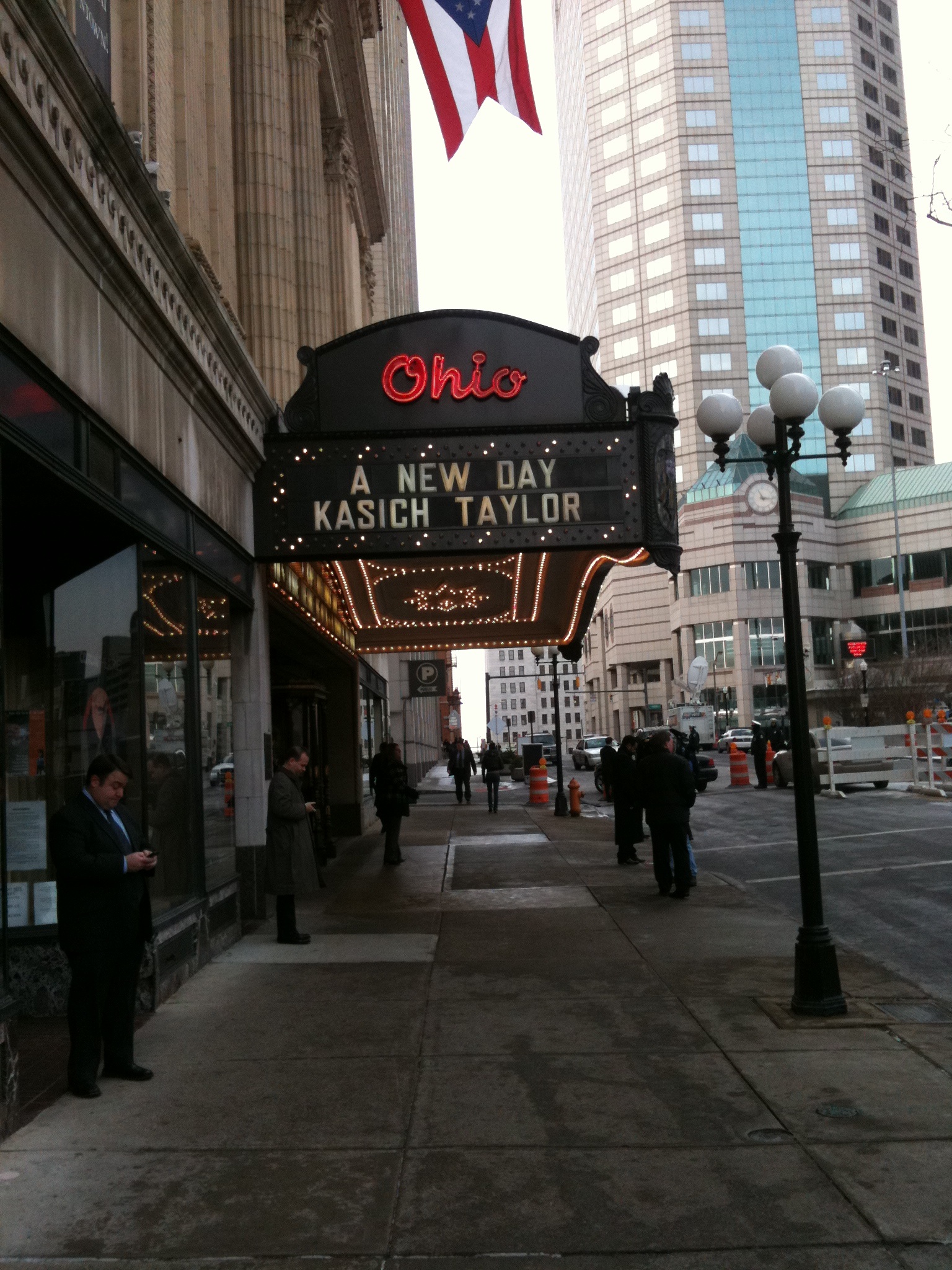
Yesterday I attended the 69th inauguration of a governor in Ohio, this time for Gov. John Kasich. His personal brand is immutable: he’s driven by a higher force, is fiercely devoted to his family, and is determined to not let special interests get in the way of fixing Ohio (we have a $10 billion deficit). His inauguration speech was a true extension of his convictions, telling small visual vignettes along the way that make his larger message memorable.
OSU Fisher College of Business – MBA Personal Branding Seminar from Articulation on Vimeo.
This comes comes on the heels of a half-day workshop I attended two days ago at the Fisher College of Business at the Ohio State University: A personal branding workshop for the first-year MBA students. Instructor and Innovation maven Mike Bills conducted this seminar to help assure that these students thought hard about what was their driving force, passions and characteristics so that when it comes down to selling themselves for a job, they aren’t just ‘speaking to the spec’ but really sharing what’s fueling their fire. (In February I get the privilege of teaching the follow-up seminar on bridging your brand to your story for these talented students).
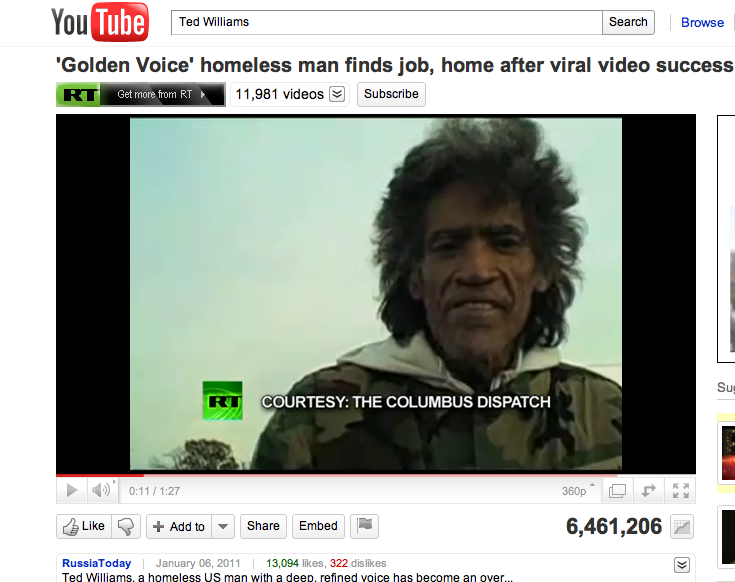
And last week in Columbus, we had the international spotlight blazing in our faces over a homeless guy with a golden voice named Ted Williams. A neighbor and Dispatch photographer Doral Chenoweth videotaped him at the side of a freeway sharing his deep, amazingly trained voice talent – only after stopping because the sign on the cardboard sheath read: “I have a golden voice.” Within a day he was being flown to appear on the Today Show and has job offers out of the woodwork.
On the surface, they all have nothing in common. The MBA students live here but many aren’t residents. Ted Williams couldn’t even prove last week that he was indeed a resident of Ohio. And yet John Kasich is not our most famous resident — as his inaugural address was indeed heard about 99% less than the Ted Williams video on Youtube.
But they have one important common bond: a personal brand that is expressed through a very unique story or narrative. Just to know what you like and what you want to do is one thing. To know how to bridge it into compelling ‘proof points,’ as Mike Bills would say or ‘defense’ as my collegue Wendy Hardman would claim is different. How do you extract the most critical examples that allow visualization and distinctiveness in your brand is what will be remembered.
So do you know your story? And better yet, can you tell it?
No Comments11 things to look forward to in 2011
Last year when we launched ar.tic.u.la.tion in mid-summer, we had no idea that we’d get the overwhelming response that we did. Between individual style coaching, signature story development advising and some unique teaching opportunities, we feel very lucky. But we know we need to work hard for that luck, so here are the top 11 things we’re focused on for 2011….(at least that we know of on this new year’s day!)
1. A vendor’s relationship with Nationwide, our hometown insurance conglomerate. We’ve been approved to work inside with their executives on speaking and presentations. This means if you work for Nationwide, you have a new source for presentation and public speaking coaching / training. If you work for another company and want the same opportunity, let us know!
2. A trip to TEDActive. This is the sister event to the ‘big’ TED, the annual event that showcases the best in new innovating thinking, trending and creations, in February. After two years of doing a wide variety of TEDx initiatives, I’m looking forward to being at a TED (okay, it’s not that hard seeing it’s in Palm Springs!)
3. Headed to the Experience Columbus (our visitor’s bureau) annual meeting in March? We’ll have a major role in shaping the stories and presentations for what will be a very different, well, experience, for them and their audience of 1000.
4. A teaching arrangement for some MBA workshops at the Fisher College of Business. We’ll start in January after Innovation Director Mike Bills does his personal branding seminar, I’ll follow up with translating that brand into your own story. You know, the answer you may struggle to find when you are asked during a job search process (or in that proverbial elevator), “What’s your story?”
5. Exploring new workshops and collaborations with Wendy Hardman, my alter-ego of presentation design. Watch for announcements early in the year. In the meantime, check out her site if you’ve got an annual meeting coming up and have a talent deficit on your team for understanding everything about presentation slide design.
6. Big ideas around TEDxColumbus. Nancy Kramer and I are noodling hard on this one. No news yet, but we are debating very exciting opportunities around what has become a very successful showcase of amazing local talent and their ideas worth spreading.
7. Weekly blog posts (right here!) on ar.tic.u.la.tion. We preach it, now it’s time for us to step up and live it. Our editorial calendar is already packed for the first quarter!
8. Live talk critiques. Once a month, we’ll attend a talk, speech or lecture and post our feedback on style, content, memorability, audience engagement, and more. If you want to nominate a talk to be critiqued, just email me.
9. A very personal one: Exchange of services with Amy Marzluff, a health coach. While I learn from her best integrative health techniques, she’s getting brushed up on her speaking skills. While I learn to diversify our new Gluten Free life (due to a child being diagnosed with celiac last year), she’s reaching new bounds with her workshops and seminars. I’m so excited about this partnership.
10. Monthly tip emails. At last! We didn’t quite get these off the ground this year, but already have the many tips already in line. If you want to subscribe, just enter your email here. We promise they will be brief and informative! We’ll include some of our favorite new reads and of course, TED talks.
11. Meeting YOUR needs. Please let us know if you would like a workshop, brown bag idea lunch or our signature one-on-one ar.tic.u.la.tion coaching for you or your associates. We have a variety of workshops, curricula and exercises ready to adapt to your specific situation.
And with that, Happy New Year. May it be filled with plenty of time and thought to create your own spectacular public speaking moments.
No Comments
Welcome
On this blog, we’ll keep you entertained (hopefully) with our perspective and tips on what makes a great speaker. From style to content, preparation to presentation, we’ll suggest ideas and post case studies. We’re glad you came to check us out, since the first part of recovery is admission. We know you can be a good speaker. Stick with us and we’ll show you how.
No Comments