


TALKBACK: Irene Navitadad
Talkback is an occasional series of review of live talks we’ve attended.
I’ve been listening to speeches the last few months with an eye to “the story.” You know, the example you give that transports you to a place with real sound, smell, taste and an example you can most assuredly repeat. That relatable moment that says I want you to care. And I want you to root for my message.
Yesterday, I went to lunch to hear Jane Goodall. She expectedly talked about reforestation, roots, shoots, chimps, apes, conservation – and waitressing to make enough money to take the boat to Africa to live her dream. Every word was rich with visuals, emotions and passion. She was sweetly elegant and so personable too.
But obviously, that’s not when I was craving a story.
Last night I went with an open mind to an event for women in economic leadership to hear what Irene Navitadad‘s story was going to be. She’s the President of the Global Summit of Women. I like the organization and was invited by a friend, but I really was hoping for a knock out talk.
During her 25 minute keynote at the “WELD KEYNOTE EVENT” focused on the status of women and where they land on corporate boards, in elected positions and what place women have at the table — the reality is, she told one repeatable story.
And it was about a man.
By all accounts, she was a very energized speaker. Great presence. Good delivery. Nice connection with the audience and seemingly a very approachable, real human. That is important toward the ‘believability’ factor of any talk.
But at a dinner event with 500 attendees, of the five slides she showed, four were (small) charts and graphs. Data from all over the world. Data I wasn’t sure what to do with in my life here in Columbus.
She did have one photo she started with – of a bunch of women opening the stock exchange in Madrid. By all accounts, it was a story to give her credibility to talk about everything else. But it really wasn’t a story. It was a proof point that she was doing her job well in getting women in great photo ops in places of influence.
I wish I had counted how many facts she shared. They were eloquent facts, indeed. But oh dear, after my 2 glasses of wine, I couldn’t remember one from the next.
So during the Q & A she shared the story of how former CEO of HP Lew Platt‘s wife died and he wanted to be involved in the raising of his children. He had to make unexpected sacrifices to his schedule and consequently, started to change the culture at HP to support other parents who were also raising children. I presume, since she chose to tell the story, that it became a model for many other corporations to follow.
Her point in a roundabout way was that unless women are in positions of influence, policies impacting women and families won’t be affected. She attempted to connect issues of better governance, tighter run meetings (and on time) and maybe another point – but I can’t remember one because I wasn’t transported to the ‘so what’ moment that is best answered with a great story.
So it may be ironic that when the woman that comes to talk to a group of 500 women about women’s place in the world ends up talking about a man.
Now that’s a story I will remember.
1 CommentThe second time around
 Do you ever wonder why ESPN Classics became so popular?
We want to know why those games were so great. We don’t see how the play is developed until the second time around.
So — when watching a great talk, do you ever wonder, what made it so great?
Sometimes it’s hard to understand why the talk was so compelling when you are listening to it for the first time.
From pixels to proteins and brainwaves to bioluminesce, some ideas are harder to comprehend than others.
So while we don’t have “Speech Classics” TV, we’ve got plenty of other channels online.
During a second review of a talk you can appreciate why they chose the visuals they did, how their story arcs with rich, vibrant, lively examples, and how they got you to well up in tears up over a set of data. You’ll see and learn things you didn’t the first time — and maybe take away a tip on how to craft your next story just a little differently.
After a week of seeing live talks at TED, I’m sure to be watching some of them over again. Especially the surgeon who printed an organ on stage…I’m still processing that one.
No CommentsTED 2011: Wondering if I’ll ever recover….
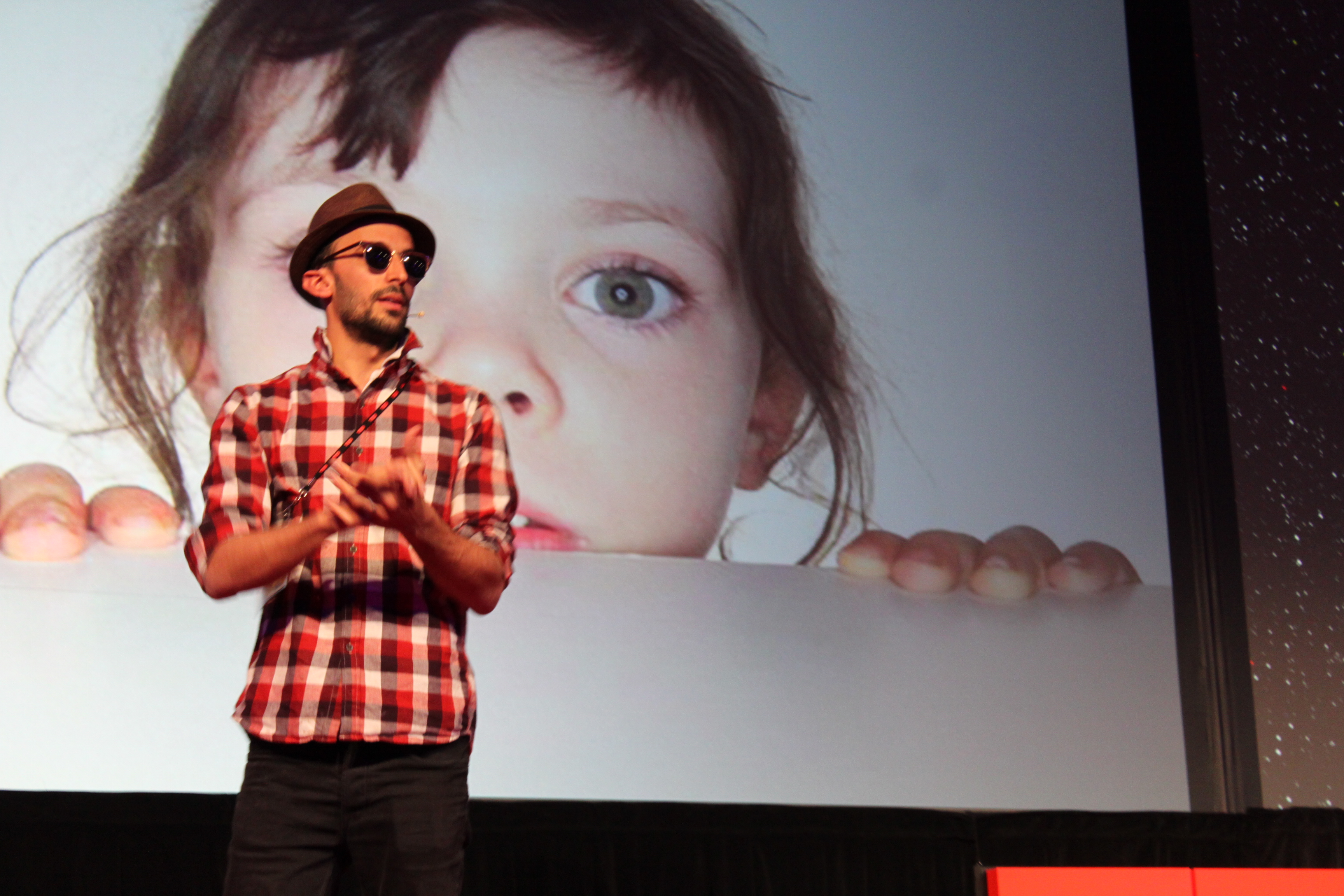
We got a rare audience with JR the artist, who came to talk with us about his TED Prize.
Consider: We spend 4 billion hours in traffic. There are 1 billion people in the world with a brain disorder. For every 400 movies made, another 11,000 porn flicks are produced. And there are 113 official ways to die in the US. These are but a few of the interesting bits I absorbed at the 2011 TED: Rediscovery of Wonder conference. But you don’t go to TED just to learn facts: you go to get immersed.
And indeed I was immersed and energized, inspired, bewildered, exhausted, touched, bedazzled…and more.
We heard about innovations that are enabling paraplegics to walk, the blind to drive, our taste senses to be teased, how cars will drive themselves, algorithms that are stunting democracy, how cyber-attacks are more deadly that weapons of mass destruction, how books can be interactive, that energy can be modular, how pixels can fly and voices merged for a beautiful internet choir. We heard from a sevent whose senses cross-talk, a worldwide famous Chinese artist whose name cannot be found in a Chinese search engine, a woman who finds light at the bottom of the ocean, a family who videotaped years of home life to learn language patterns, and a man who is literally printing organs.
As a result of being immersed in the real (the conference was broadcast from Long Beach from TED) and virtual (I watched from TEDActive in Palm Springs) presence of amazing thinkers, innovators, scientists, designers, activists and more, I decided to share some of the more memorable quotes I managed to catch. Within each you can get a taste of the individual parts that made up this memorable event.
11 for TED 2011
“They publish photos, not excuses.”
– Phil Nicklen, the National Geographic photographer, on how he had to stay motivated to pursue his mission to swim with and photograph leopard seals, who were previously believed to be deadly to humans.
“The future has arrived, and the future is now.”
– Wadah Khanfa, Al Jazeera’s Director General, on the developments in Egypt, Libya and surrounds.
“When I finish I have the answers.”
– Sarah Marquis response to why she chooses to take 2 year treks, by foot and alone, from places like Siberia to Austrailia.
“One of the hardest things to know is when you don’t know.”
– Futurist Juan Enriquez in introducing one of the speakers he curated. Interestingly enough, I had no idea who Juan was and it proved to be a delightful experience in listening carefully to his words to understand why I should trust this man I didn’t know.
“All the connections of the things around you define who you are.”
– Aaron O’Connell, relating his breakthrough theories of quantum physics
“People learn from people they love, but that reality is expunged from politics.”
– David Brooks, on the disconnect between politician’s innate ability to be interpersonal with people, but not policy.
(And one more from Brooks’ talk: “They don’t have thighs but elegant calfs on top of one another,” during his riff on the uber-mom).
“Doodling is a pre-emptive measure to help you keep focus.”
– Sunni Brown on why the doodler is under-appreciated in society.
“There’s never a wrong time to do the right thing.”
– David Cameron, as quoted by Bruce Aylward from the WHO, on the pursuit of the eradication, not just control, of Polio.
“Can’t have a functioning democracy without a constant flow of information.”
– Eli Pariser on the scary algorithms that Google (and others) are deploying to narrowcast news to us.
“Chaos happens, make better use of it.”
– Ed Tenner on unintended consequences.
“We will look back on a time when people will say how ridiculous it is that people are driving cars.”
– Sebastian Thrun on the driverless car he’s been developing.
Other thoughts….
I would be remiss not to give kudos to the 50+ speakers for their outstanding performances. Because giving a TED Talk is hardly just a talk. While some were obviously more memorable than others, I was impressed with the judicious use of visuals, the arc of each story and true desire to connect with the audience. Likewise, a huge bravo to the TED staff. My experience at TED, watching the talks with others, meeting colleagues from across the globe, was a rare and special time. (Thank you!)
Excuse me now while I go check on the cast that is supporting all the brain muscles I pulled living through, thinking about and reporting back on TED. It’s a good kind of sore.
(All talks referenced above will be archived on TED.com at some point. To learn more about any of the speakers, start with this page within TED to begin your crawl down their rabbit holes. Enjoy!).
No CommentsOne Keynote, Five Parts.
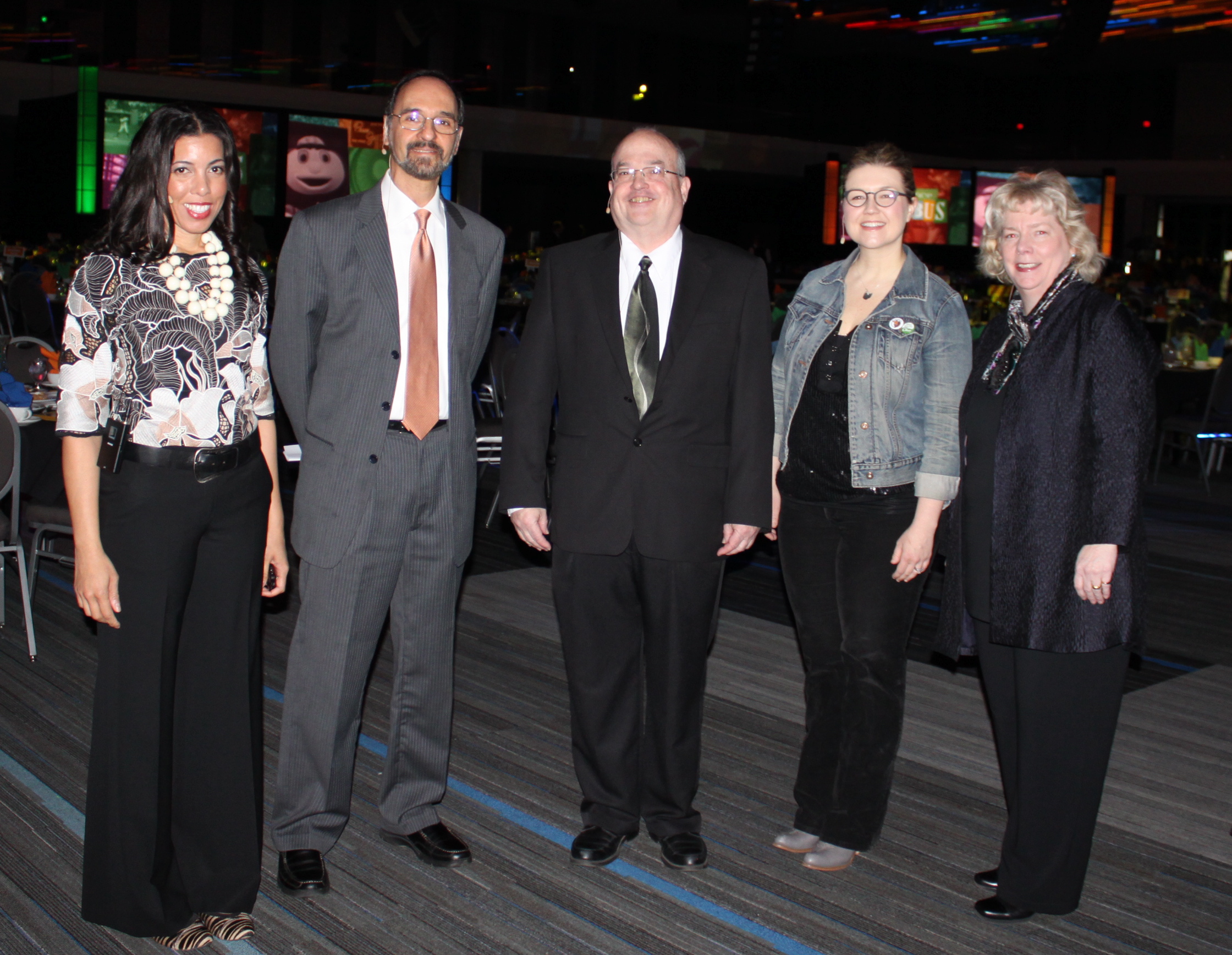
Experience Columbus, our travel and tourism bureau, invited articulation to help curate their “keynote address” for their annual meeting. These five dynamic people pictured above ended up being the participants in what became a ‘fam tour’ — five short stories that wove a larger story about how Columbus is a great destination for tourism and travel — told like they may share it with a reporter who was visiting Columbus. Dare I say, we had a phenomenal experience working each story so that it was true to their own personal perspectives but working as a larger unit for the audience to follow and enjoy.
Many thanks to Christina Getachew, Kamal Boulous, Joe Santry, Jeni Britton and Nannette Macijeunes for their fantastic cooperation and even more outstanding deliveries. Some of you were hesitant, nervous and reluctant — but in the end, everyone really embraced the theater in the round, the teleprompters and headsets like it’s a part of your every day job. Bravo!
 Christina Getachew as seen on the projection screen at the Experience Columbus luncheon.